Introduction
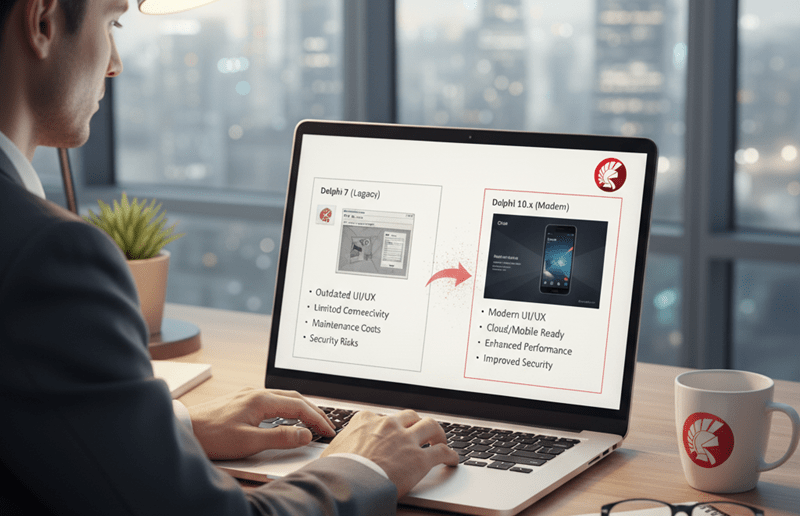
Delphi 7 has earned its place as a legendary IDE—fast, stable, and used to build robust Windows applications that still run in production environments today. However, as technologies evolve and business needs change, continuing to rely on Delphi 7 can create significant roadblocks. For companies looking to scale, stay secure, and maintain developer efficiency, migrating to Delphi 10.x (or later) is no longer a technical luxury—it’s a strategic imperative. This blog explores why an upgrade is worth it, what’s at stake if you don’t, and how organizations benefit from making the leap.
1. Security & OS Compatibility
Delphi 7 was released in 2002, long before the modern Windows operating systems and their security protocols were in place.
If your application still runs on Delphi 7, you’re likely facing:
- Compatibility issues on Windows 10 and 11
- Lack of support for high-DPI displays and scaling
- Increased vulnerability to OS-level exploits
- By migrating to Delphi 10.x, your application becomes natively compatible with current and future Windows versions, ensuring better protection against system-level threats and improved stability across devices.
2. Access to Modern Language Features
The Object Pascal language has matured significantly since Delphi 7. Newer versions support:
- Generics and Anonymous Methods
- Enhanced RTTI (Run-Time Type Information)
- Parallel Programming Library
- Improved memory management with ARC (Automatic Reference Counting)
- These enhancements allow developers to write cleaner, more efficient, and more scalable code—cutting down development time and future-proofing your software.
3. Cross-Platform Development
Delphi 7 applications are limited to Windows desktop. With Delphi 10.x and above, you can target:
- Windows (native)
- macOS
- Linux (via FMX Linux)
- iOS and Android (with FireMonkey)
- If your business plans to enter mobile or web-based environments, an upgrade is the only way to get there using the same codebase.
4. Third-Party Component Support
Many third-party libraries and visual components have either stopped supporting Delphi 7 or offer limited backward compatibility. This becomes a bottleneck when:
- You want to integrate modern libraries (e.g., REST clients, cloud SDKs, data grids)
- You run into bugs that are no longer patched for Delphi 7
- You want professional support from vendors
- With Delphi 10.x, you regain access to a wide ecosystem of supported and updated components, reducing technical debt.
5. Better Developer Productivity
Delphi 10.x comes with features that vastly improve development speed and team collaboration:
- Enhanced IDE with better debugging tools
- Built-in version control integration
- Live Bindings and FireDAC for faster database access
- Visual styles and UI theming options
- All of these allow developers to spend more time coding and less time fixing legacy issues.
6. Risk of Talent Drain
Finding Delphi developers who are willing to work in older environments like Delphi 7 is increasingly difficult. Younger developers are trained in modern toolchains and are reluctant to work with outdated tech.
Sticking with Delphi 7:
- Narrows your hiring pool
- Increases dependency on a shrinking group of senior developers
- Makes onboarding new developers costly and time consuming
- Upgrading to Delphi 10.x makes your technology stack more attractive and manageable for modern teams.
7. Real-World Success Example
One of our clients—a large FinTech organization in South Africa—had built their document workflow system using Delphi 5 and faced constant crashes on Windows 10. After migrating to Delphi 11 Alexandria, they experienced a 60% drop in runtime errors and were able to cut down 40% of their support load.
Conclusion: Don’t Wait Until It Breaks
Staying on Delphi 7 might seem cost-effective in the short term, but the hidden costs—downtime, missed features, developer frustration, and future migration complexity—can be enormous. Migrating to Delphi 10.x is not just about upgrading software—it’s about upgrading your business strategy. At Delphinext, we’ve helped dozens of companies migrate seamlessly while retaining business logic and extending product life. If you’re considering a move, we’re here to guide the way.
Ready to Modernize?
Let’s talk. Contact us to schedule a Delphi migration assessment or get a codebase evaluation today.